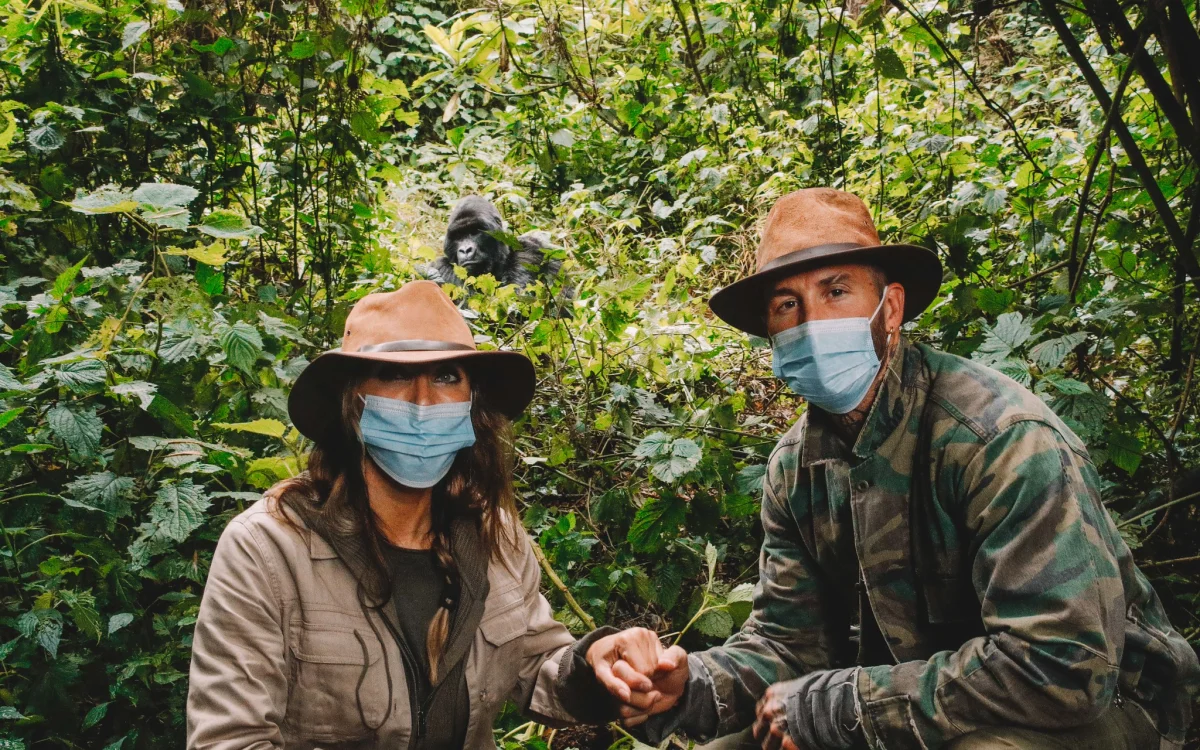
The best time for gorilla trekking in Rwanda is during the dry seasons: June to September (long dry season) and December to February (short dry season).
These months generally offer drier trails, less slippery terrain, and more comfortable hiking conditions in Volcanoes National Park. However, gorilla trekking is possible throughout the year, including the rainy seasons from March to May and October to November. The best month for your trip depends on your preferred weather, travel dates, and the type of experience you want.
Rwanda Gorilla Trekking at a Glance
Rwanda is one of only three countries where endangered mountain gorillas live, alongside Uganda and the Democratic Republic of the Congo. Here are the essentials in one look.
Rwanda gorilla trekking by month
Rwanda has two dry seasons and two rainy seasons, and Volcanoes National Park, the only place to trek gorillas in Rwanda, sits high in the volcanoes at 2,400 to 4,500 metres, so rain matters. Here is how each month looks for trekking.
| Month | Season | What the trails are like | Trekking rating |
|---|---|---|---|
| January | Short dry season | Mostly dry and firm, fewer crowds than July and August | Excellent |
| February | End of short dry season | Mostly dry, a few showers | Very good |
| March | Long rains begin | Muddy and slippery | Fair |
| April | Peak of long rains | Wettest month, toughest hiking | Challenging |
| May | Rains easing | Easing late in the month, forest at its greenest | Fair |
| June | Long dry season | Firm trails, clear views | Excellent |
| July | Long dry season | Reliably dry, very popular | Excellent |
| August | Long dry season | Dry, busy, Kwita Izina gorilla naming ceremony | Excellent |
| September | Long dry season | Dry, rain may return near month end | Excellent |
| October | Short rains begin | Showers return, quieter park | Fair |
| November | Short rains | Wetter, softer trails | Fair |
| December | Dry weather returns | Drying out, festive crowds | Very good |
Dry season vs rainy season: what changes for your trek
The dry months give you the easiest hike and the best views, while the wet months give you quieter forests and easier bookings. You see gorillas in both, but no month guarantees dry weather, because the volcanoes get rain and mist all year.
| Dry season (Jun to Sep, Dec to Feb) | Rainy season (Mar to May, Oct to Nov) | |
|---|---|---|
| Trails | Firmer and less slippery | Muddy, steeper going |
| Views and photos | Clearer, better light | More cloud and mist |
| Crowds | Busiest, especially July and August | Fewer visitors |
| Permit availability | Sells out months ahead | Easier to secure |
| What to pack | Light layers, sun hat | Waterproof jacket, gaiters, spare socks |
| Scenery | Clear skies, drier forest | Lush, deep green |
Heavy rain can occasionally mean a changed route or a delayed start, so keep your schedule flexible in March, April and November.
Which month is right for you?
Pick your month by what you want from the trip, not only by the rain chart.
June to September
Trails are at their firmest and the forest is at its clearest.
January and early February, or June
You get dry trails without the July and August crowds, especially in June before the peak rush.
The dry months
Clearer light under the canopy. Wet-season mist is atmospheric, but plan on rain covers for your camera.
May, October and November
Expect mud and showers, and pack accordingly.
Dry season, all parks
The dry season is also the best time for game drives in Akagera National Park and chimpanzee trekking in Nyungwe Forest.
July to September
This lines up with the wildebeest migration in the Maasai Mara and the Serengeti, so a gorilla trek and a migration safari fit into one East Africa trip.
Before you book: permits and trek basics
A gorilla permit costs US$1,500 per international visitor in 2026, and it is the one thing you should secure first, because it fixes your dates.
| What to know | Detail |
|---|---|
| Permit price (international visitors) | US$1,500 per person |
| Lower permit rates in 2026 | US$200 for Rwandans and East African Community citizens, US$500 for other African visitors and residents (not available June to October) |
| Time with the gorillas | One hour once you find the family |
| Group size | Up to eight visitors per gorilla family |
| Minimum age | 15 years |
| Getting there | About three hours by road from Kigali to Volcanoes National Park |
| Booking window | Several months ahead; for July and August, a year ahead is not too early |
The permit covers park entry and your ranger-guided trek. It does not cover lodging, transfers, meals, porters or tips. The lower promotional rates run through the end of 2026 and do not apply from June to October, so confirm the price for your exact trek date when you book.
The gorilla families live on forested slopes at roughly 2,500 to 4,000 metres, so the hike can be steep, muddy and tiring, though most travellers find it well worth the effort. Porters are available at the start of the trek to carry your backpack and camera and to steady you on difficult ground. Hiring one is a simple way to make the walk easier and to support local people.
Gorilla trekking rules and etiquette
Mountain gorillas can catch human illnesses, so a few simple rules protect them and keep gorilla tourism sustainable. Your guide will brief you at check-in, but it helps to know them in advance. The one-hour limit, the group size of eight and the minimum age of 15 are covered above.
Health and distance
- Keep your distance. Stay at least 7 metres (about 22 feet) from the gorillas.
- Do not trek if you are unwell. Visitors with a cold, flu or other respiratory symptoms are not allowed to join a trek, so tell your operator early if you feel ill before your date.
- Cover coughs and sneezes. Turn away from the gorillas and cover your mouth.
- Respect the age limit. Visitors must be 15 or older, both for safety and because younger children are more prone to infection.
Behaviour with the gorillas
- Stay calm and quiet. Keep your voice low and avoid sudden movements that could alarm them.
- If a gorilla charges or vocalises, stay where you are, look away and follow your guide's instructions. This is normal gorilla communication, not an attack.
- No eating or drinking while you are with the gorillas.
- No flash photography. Switch your flash off before you reach them.
- No smoking anywhere on the trek.
- Leave nothing behind. Carry out everything you bring in.
Sightings are very reliable, but your experience still depends on the weather and trekking conditions on the day. These rules reflect protocols from the IUCN that limit stress on the gorillas and reduce the risk of passing diseases from people to animals. Mountain gorilla tourism helps fund the protection of this endangered species and its forest, so following them is part of the experience.
Gorilla trekking in Rwanda: common questions
What is the best month for gorilla trekking in Rwanda?
July is the safest all-round pick, with the driest trails of the year. If you want similar conditions with fewer people, choose January or June.
Can you go gorilla trekking in Rwanda in the rainy season?
Yes. There is no closed season, and permits are sold for every month. Trails are muddier in March, April, October and November, so bring waterproofs and sturdy boots.
What is the hardest month to trek?
April, which sits at the peak of the long rains. The gorillas are still there, but the climb is slipperier and your schedule needs more flexibility.
How far ahead should I book a gorilla permit?
Book several months ahead for the dry seasons, and up to a year ahead for July and August. Rainy-season dates are usually easier to get.
How much is a gorilla permit in Rwanda?
US$1,500 per person for international visitors in 2026. Rwandans, East African citizens and other African visitors pay lower promotional rates outside June to October.
How long do you spend with the gorillas?
One hour once you reach the family. The walk to find them can take anywhere from under an hour to several hours.
Is December a good time to trek?
Yes, from mid-December the weather turns dry again. It is a festive period, so book permits and lodges early.
Is the best time the same in Rwanda and Uganda?
Broadly yes. Both countries share the same two dry seasons, so June to September and December to February work well in either.
Popular gorilla trekking safaris
Every journey is privately tailored around your dates, pace, accommodation and budget. These are some of our most popular ways to meet the gorillas.
Gorilla Trekking in Volcanoes National Park
Gorilla trek
Rwanda Gorilla Trekking Tour
Gorilla trek
Rwanda Gorilla Trekking Safari
Gorilla trek
Ultimate Rwanda Gorilla & Golden Monkey Trekking Safari
Gorillas and golden monkeys
Rwanda Chimpanzee & Gorilla Trekking Safari
Chimpanzees in Nyungwe and gorillas in Volcanoes
Rwanda Big Five Safari & Gorilla Trekking
Big Five in Akagera and gorillas in Volcanoes
Prices are starting rates from our Rwanda itineraries page, checked October 28, 2026, and can change with your dates and travel style.
Plan your gorilla trek with Vazquez Tours & Travel
Tell us the month you have in mind and we will tell you honestly what to expect. Vazquez Tours & Travel is a Rwanda-based operator offering gorilla trekking, golden monkey and chimpanzee trekking, canopy walks and Big Five safaris across Rwanda, Uganda, Kenya and Tanzania. Send us your dates and we will help you choose the best window and plan around permit availability.
Sources and further reading
Prices and rules checked October 28, 2026. Permit fees can change, so confirm with the Rwanda Development Board or your operator before paying.
- Rwanda: Promotional Rates for Gorilla Trekking Extended, The New Times via allAfrica
- Best time to see gorillas in Rwanda, Follow Alice
- When to visit Rwanda, Natural World Safaris
- Best time to visit Rwanda, Asilia Africa